
Contribute an essay – Help make art history relevant and engaging; Westward the Course of Empire Takes Its Way Rothermel, De Soto Raising the Cross on the Banks of the Mississippi Remington's The Fall of the Cowboy Aestheticism and the Gilded Age Browse this content The Holy Roman Empire (Latin: Sacrum Imperium Romanum; German: Heiliges Römisches Reich) was a multi-ethnic complex of territories in Western, Central and Southern Europe that developed during the Early Middle Ages and continued until its dissolution in during the Napoleonic Wars.. The empire was created by joining in personal union and with the imperial title the crown of the Kingdom of The Roman Empire in the west did not fall due to any shock of foreign conquest or become barbarized through any deliberate attack on the ancient culture. The so-called barbarian invasions, therefore, are very hard to define. Short Essay on Jodh Bai’s Palace May 24, Tombs in India: 9 Ancient Tombs in India May 24,
Holy Roman Empire - Wikipedia
The Holy Roman Empire Latin : Sacrum Imperium Romanum ; German : Heiliges Römisches Reich was a multi-ethnic complex of territories in WesternCentral and Southern Europe that developed during the Early Middle Ages and continued until its dissolution in during the Napoleonic Wars.
The empire was created by joining in personal union and with the imperial title the crown of the Kingdom of Italy with the Frankish crown, particularly the Kingdom of East Francia Later Kingdom of Germanyas well as titles of other smaller territories.
Soon these kingdoms would be joined by the Kingdom of Burgundy and Kingdom of Bohemia. By the end of the 15th century the empire was still in theory composed of three major blocks — Italy, Germany and Burgundy.
Later territorially only the Kingdom of Germany and Bohemia remained, with the Burgundian territories lost to France, the fall of the roman empire essay. Although the Italian territories were formally part of the empire, the territories were ignored in the Imperial Reform and splintered into numerous de facto independent territorial entities.
Some territories like Piedmont-Savoy became increasingly independent, while others became more dependent due to the extinction of their ruling noble houses causing these territories to often fall under the dominions of the Habsburgs and their cadet branches.
Barring the loss of Franche-Comté inthe external borders of the Empire did not change noticeably from the Peace of Westphalia — which acknowledged the exclusion of Switzerland and the Northern Netherlands, and the French protectorate over Alsace — to the dissolution of the Empire.
At the conclusion of the Napoleonic Wars inmost of the Holy Roman Empire was included in the German Confederationwith the main exceptions being the Italian states.
On 25 DecemberPope Leo III crowned the The fall of the roman empire essay king Charlemagne as Emperorreviving the title in Western Europemore than three centuries after the fall of the earlier ancient Western Roman Empire in In theory and diplomacy, the Emperors were considered primus inter paresregarded as first among equals among other Roman Catholic monarchs across Europe.
The title was revived again in when Otto IKing of Germany, was crowned emperor, fashioning himself as the successor of Charlemagne [13] and beginning a continuous existence of the empire for over eight centuries. The exact term "Holy Roman Empire" was not used until the 13th century, before which the empire was referred to variously as universum regnum "the whole kingdom", as opposed to the regional kingdomsimperium christianum "Christian empire"or Romanum imperium "Roman empire"[21] but the Emperor's legitimacy always rested on the concept of translatio imperii[d] that he held supreme power inherited from the ancient emperors of Rome.
The empire never achieved the extent of political unification as was formed to the west the fall of the roman empire essay the relatively centralized kingdom of Franceevolving instead into a decentralised, limited elective monarchy composed of hundreds of sub-units : kingdomsprincipalitiesduchiescountiesthe fall of the roman empire essay, prince-bishopricsFree Imperial Citiesand eventually even individuals enjoying imperial immediacysuch as the imperial knights.
Emperor Francis II dissolved the empire on 6 August following the creation of the Confederation of the Rhine by Emperor Napoleon I the month before. The Empire was considered by the Roman Catholic Church to be the only legal successor of the Roman Empire during the Middle Ages and the early modern period.
Since Charlemagne, the realm was merely referred to as the Roman Empire. In a decree following the Diet of Cologne inthe fall of the roman empire essay, the name was changed to the Holy Roman Empire of the German Nation German : Heiliges Römisches Reich Deutscher NationLatin : Sacrum Imperium Romanum Nationis Germanicæthe fall of the roman empire essay, [26] a form first used in a document in By the end of the 18th century, the term "Holy Roman Empire of the German Nation" fell out of official use.
Contradicting the traditional view concerning that designation, Hermann Weisert has argued in a study on imperial titulature that, despite the claims of many textbooks, the name "Holy Roman Empire of the German Nation" never had an official status and points out that documents were thirty times as likely to omit the national suffix as include it.
In a famous assessment of the name, the political philosopher Voltaire remarked sardonically: "This body which was called and which still calls itself the Holy Roman Empire was in no way holy, nor Roman, nor an empire. In the modern period, the Empire was often informally called the German Empire Deutsches Reich or Roman-German Empire Römisch-Deutsches Reich.
Beginning inearly twentieth-century German nationalists and Nazi propaganda would identify the Holy Roman Empire as the First Reich Reich meaning empirewith the German Empire as the Second Reich and either a future German nationalist state or Nazi Germany as the Third Reich. As Roman power in The fall of the roman empire essay declined during the 5th century, local Germanic tribes assumed control.
InPepin's son Charlemagne became King of the Franks and began an extensive the fall of the roman empire essay of the realm. He eventually incorporated the territories of present-day France, Germany, northern Italy, the Low Countries and beyond, linking the Frankish kingdom with Papal lands. Although antagonism about the expense of Byzantine domination had long persisted within Italy, a political rupture was set in motion in earnest in by the iconoclasm of Emperor Leo III the Isaurianin what Pope Gregory II saw as the latest in a series of imperial heresies.
As the Latin Church only regarded a male Roman Emperor as the head of ChristendomPope Leo III sought a new candidate for the dignity, excluding consultation with the Patriarch of Constantinople.
Charlemagne's good service to the Church in his defense of Papal possessions against the Lombards made him the ideal candidate. On Christmas Day ofPope Leo III crowned Charlemagne emperor, restoring the title in the West for the first time in over three centuries. Charlemagne adopted the formula Renovatio imperii Romanorum "renewal of the Roman Empire".
The fall of the roman empire essayIrene was overthrown and exiled by Nikephoros I and henceforth there were two Roman Emperors, the fall of the roman empire essay. After Charlemagne died inthe imperial crown passed to his son, Louis the Pious. Upon Louis' death init passed to the fall of the roman empire essay son Lothairwho was his co-ruler.
By this point the territory of Charlemagne was divided into several territories cf. Treaty of VerdunTreaty of PrümTreaty of Meerssen and Treaty of Ribemontand over the course of the later ninth century the title of Emperor was disputed by the Carolingian rulers of Western Francia and Eastern Franciawith first the western king Charles the Bald and then the eastern Charles the Fatwho briefly reunited the Empire, attaining the prize.
After the death of Charles the Fat in the Carolingian Empire broke apart, and was never restored. According to Regino of Prümthe parts of the realm "spewed forth kinglets", and each part elected a kinglet "from its own bowels". Aroundautonomous stem duchies FranconiaBavariaSwabiaSaxonyand Lotharingia reemerged in East Francia.
After the Carolingian king Louis the Child died without issue inEast Francia did not turn to the Carolingian ruler of West Francia to take over the realm but instead elected one of the dukes, Conrad of Franconiaas Rex Francorum Orientalium.
Henry died inbut his the fall of the roman empire essay, the Liudolfing or Ottonian dynastywould continue to rule the Eastern kingdom for roughly a century. Upon Henry the Fowler's death, Ottohis son and designated successor, [47] was elected King in Aachen in After that, the king managed to control the appointment of dukes and often also employed bishops in administrative affairs.
InOtto came to the aid of Adelaidethe widowed queen of Italy, defeating her enemies, marrying her, and taking control over Italy. Otto's coronation as Emperor marked the German kings as successors to the Empire of Charlemagne, which through the concept of translatio imperiialso made them consider themselves as successors to Ancient Rome.
The kingdom lacked a permanent capital city. Kingship continued to be transferred by election, but Kings often ensured their own sons were elected during their lifetimes, enabling them to keep the crown for their families.
This only changed after the end of the Salian dynasty in the 12th century. Inthe fall of the roman empire essay, Otto deposed the current Pope John XII and chose Pope Leo VIII as the new pope although John XII and Leo VIII both claimed the papacy until when John XII died. This also renewed the conflict with the Eastern Emperor in Constantinopleespecially after Otto's son Otto II r. Still, Otto II formed marital ties with the east when he married the Byzantine princess Theophanu.
Up to that time, he remained in Germany, while a deposed duke, Crescentius IIruled over Rome and part of Italy, ostensibly in his stead. In Otto III appointed his cousin Gregory V the first German Pope. Otto III's former mentor Antipope John XVI briefly held Rome, until the Holy Roman Emperor seized the city. Otto died young inand was succeeded by his cousin Henry IIwho focused on Germany.
Henry II died in and Conrad IIfirst of the Salian dynastywas elected king only after some debate among dukes and nobles. This group eventually developed into the college of Electors. Kings often employed bishops in administrative affairs and often determined who would be appointed to ecclesiastical offices. The reform-minded Pope Gregory VII was determined to oppose such practices, which led to the Investiture Controversy with Henry IV r. Henry IV repudiated the Pope's interference and persuaded his bishops the fall of the roman empire essay excommunicate the Pope, whom he famously addressed by his born name "Hildebrand", rather than his regnal name "Pope Gregory VII".
Meanwhile, the German princes had elected another king, Rudolf of Swabia. Henry managed to defeat Rudolf, but was subsequently confronted with more uprisings, renewed excommunication, and even the rebellion of his sons.
After his death, his second son, Henry Vreached an agreement with the Pope and the bishops in the Concordat of Worms. The Pope and the German princes had surfaced as major players in the political system of the empire. As the result of Ostsiedlungless-populated regions of Central Europe i. the territory of today's Poland and Czech Republic became The fall of the roman empire essay. Silesia became part of the Holy Roman Empire as the result of the local Piast dukes' push for autonomy from the Polish Crown.
When the Salian dynasty ended with Henry V's death inthe princes chose not to elect the next of kin, but rather Lothairthe moderately powerful but already old Duke of Saxony. When he died inthe princes again aimed to check royal power; accordingly they did not elect Lothair's favoured heir, his son-in-law Henry the Proud of the Welf family, but Conrad III of the Hohenstaufen family, the grandson of Emperor Henry IV and thus a nephew of Emperor Henry V.
This led to over a century of strife between the two houses. Conrad ousted the Welfs from their possessions, but after his death inhis nephew Frederick I "Barbarossa" succeeded him and made peace with the Welfs, restoring his cousin Henry the Lion to his — albeit diminished — possessions.
The Hohenstaufen rulers increasingly lent land to ministerialiaformerly non-free servicemen, who Frederick hoped would be more reliable than dukes. Initially used mainly for war services, this new class of people would form the the fall of the roman empire essay for the later knightsanother basis of imperial power. A further important constitutional move at Roncaglia was the establishment of a new peace mechanism for the entire the fall of the roman empire essay, the Landfriedenwith the first imperial one being issued in under Henry IV at Mainz.
This was an attempt to abolish private feuds, between the many dukes and other people, and to tie the emperor's subordinates to a legal system of jurisdiction and public prosecution of criminal acts — a predecessor of the modern concept of " rule of law ". Another new concept of the time was the systematic founding of new cities by the Emperor and by the local dukes.
These were partly a result of the explosion in population; they also concentrated economic power at strategic locations. Before this, cities had only the fall of the roman empire essay in the form of old Roman foundations or older bishoprics. Cities that were founded in the 12th century include Freiburgpossibly the economic model for many later cities, and Munich. Frederick Ialso called Frederick Barbarossa, was crowned emperor in He emphasized the "Romanness" of the empire, partly in an attempt to justify the power of the emperor independent of the now strengthened pope.
An imperial assembly at the fields of Roncaglia in reclaimed imperial rights in reference to Justinian I 's Corpus Juris Civilis. Imperial rights had been referred to as regalia since the Investiture Controversy but were enumerated for the first time at Roncaglia. This comprehensive list included public roads, tariffs, coiningcollecting punitive fees, and the seating and unseating of office-holders.
These rights were now explicitly rooted in Roman lawa far-reaching constitutional act. Frederick's policies were primarily directed at Italy, where he clashed with the increasingly wealthy and free-minded cities of the north, especially Milan.
He also embroiled himself in another conflict with the Papacy by supporting a candidate elected by a minority against Pope Alexander III — Frederick supported a succession of antipopes before finally making peace with Alexander in In Germany, the Emperor had repeatedly protected Henry the Lion against complaints by rival princes or cities especially in the cases of Munich and Lübeck.
Henry gave only lackluster support to Frederick's policies, and, in a critical situation during the Italian wars, Henry refused the Emperor's plea for military support. After returning to Germany, an embittered Frederick opened proceedings against the Duke, resulting in a public ban and the confiscation of all Henry's territories. InFrederick participated in the Third Crusadedying in the Armenian Kingdom of Cilicia. During the Hohenstaufen period, German princes facilitated a successful, peaceful eastward settlement of lands that were uninhabited or inhabited sparsely by West Slavs.
German-speaking farmers, traders, and craftsmen from the western part of the Empire, both Christians and Jews, moved into these areas. The gradual Germanization of these lands was a complex phenomenon that should the fall of the roman empire essay be interpreted in the biased terms of 19th-century nationalism.
The eastward settlement expanded the influence of the empire to include Pomerania and Silesiaas did the intermarriage of the local, still mostly Slavic, the fall of the roman empire essay, rulers with German spouses, the fall of the roman empire essay.
The Teutonic Knights were invited to Prussia by Duke Konrad of Masovia to Christianize the Prussians in The monastic state of the Teutonic Order German : Deutschordensstaat and its later German successor state of Prussia were never part of the Holy Roman Empire. Under the son and successor of Frederick Barbarossa, Henry VIthe Hohenstaufen dynasty reached its apex.
Ten Minute History - The Fall of Rome (Short Documentary)
, time: 10:00Coatlicue – Smarthistory
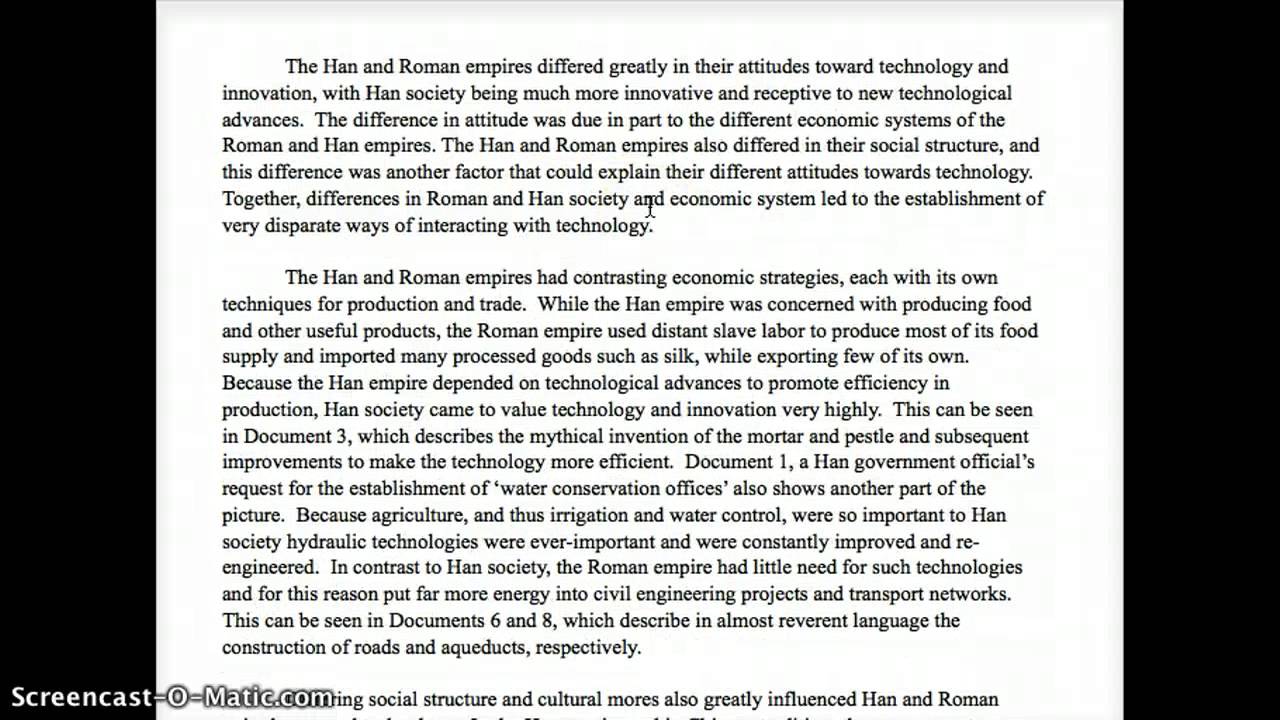
Contribute an essay – Help make art history relevant and engaging; Westward the Course of Empire Takes Its Way Rothermel, De Soto Raising the Cross on the Banks of the Mississippi Remington's The Fall of the Cowboy Aestheticism and the Gilded Age Browse this content The Holy Roman Empire (Latin: Sacrum Imperium Romanum; German: Heiliges Römisches Reich) was a multi-ethnic complex of territories in Western, Central and Southern Europe that developed during the Early Middle Ages and continued until its dissolution in during the Napoleonic Wars.. The empire was created by joining in personal union and with the imperial title the crown of the Kingdom of The Roman Empire in the west did not fall due to any shock of foreign conquest or become barbarized through any deliberate attack on the ancient culture. The so-called barbarian invasions, therefore, are very hard to define. Short Essay on Jodh Bai’s Palace May 24, Tombs in India: 9 Ancient Tombs in India May 24,


No comments:
Post a Comment